


AN EPIC OF EARTH, FIRE AND DREAMS Accessibility Statement Skip Navigation Resources Investor Relations Journalists
Agencies Client Login Send a Release News Products Contact Search Search When typing in this field, a list of search
results will appear and be automatically updated as you type. Searching for your content... No results found. Please
change your search terms and try again. News in Focus Browse News Releases All News Releases All Public Company
English-only News Releases Overview Multimedia Gallery All Multimedia All Photos All Videos Multimedia Gallery Overview
Trending Topics All Trending Topics Business & Money Auto & TransportationAll Automotive & Transportation
Aerospace, Defense Air Freight Airlines & Aviation Automotive Maritime & Shipbuilding Railroads and Intermodal
Transportation Supply Chain/Logistics Transportation, Trucking & Railroad Travel Trucking and Road Transportation
Auto & Transportation OverviewView All Auto & Transportation Business TechnologyAll Business Technology
Blockchain Broadcast Tech Computer & Electronics Computer Hardware Computer Software Data Analytics Electronic
Commerce Electronic Components Electronic Design Automation Financial Technology High Tech Security Internet Technology
Nanotechnology Networks Peripherals Semiconductors Business Technology OverviewView All Business Technology
Entertainment & MediaAll Entertainment & Media Advertising Art Books Entertainment Film and Motion Picture
Magazines Music Publishing & Information Services Radio & Podcast Television Entertainment & Media
OverviewView All Entertainment & Media Financial Services & InvestingAll Financial Services & Investing
Accounting News & Issues Acquisitions, Mergers and Takeovers Banking & Financial Services Bankruptcy Bond &
Stock Ratings Conference Call Announcements Contracts Cryptocurrency Dividends Earnings Earnings Forecasts &
Projections Financing Agreements Insurance Investments Opinions Joint Ventures Mutual Funds Private Placement Real
Estate Restructuring & Recapitalization Sales Reports Shareholder Activism Shareholder Meetings Stock Offering Stock
Split Venture Capital Financial Services & Investing OverviewView All Financial Services & Investing General
BusinessAll General Business Awards Commercial Real Estate Corporate Expansion Earnings Environmental, Social and
Governance (ESG) Human Resource & Workforce Management Licensing New Products & Services Obituaries Outsourcing
Businesses Overseas Real Estate (non-US) Personnel Announcements Real Estate Transactions Residential Real Estate Small
Business Services Socially Responsible Investing Surveys, Polls and Research Trade Show News General Business
OverviewView All General Business Science & Tech Consumer TechnologyAll Consumer Technology Artificial Intelligence
Blockchain Cloud Computing/Internet of Things Computer Electronics Computer Hardware Computer Software Consumer
Electronics Cryptocurrency Data Analytics Electronic Commerce Electronic Gaming Financial Technology Mobile
Entertainment Multimedia & Internet Peripherals Social Media STEM (Science, Tech, Engineering, Math) Supply
Chain/Logistics Wireless Communications Consumer Technology OverviewView All Consumer Technology Energy & Natural
ResourcesAll Energy Alternative Energies Chemical Electrical Utilities Gas General Manufacturing Mining Mining &
Metals Oil & Energy Oil and Gas Discoveries Utilities Water Utilities Energy & Natural Resources OverviewView
All Energy & Natural Resources EnvironmentAll Environment Conservation & Recycling Environmental Issues
Environmental Policy Environmental Products & Services Green Technology Natural Disasters Environment OverviewView
All Environment Heavy Industry & ManufacturingAll Heavy Industry & Manufacturing Aerospace & Defense
Agriculture Chemical Construction & Building General Manufacturing HVAC (Heating, Ventilation and Air-Conditioning)
Machinery Machine Tools, Metalworking and Metallurgy Mining Mining & Metals Paper, Forest Products & Containers
Precious Metals Textiles Tobacco Heavy Industry & Manufacturing OverviewView All Heavy Industry & Manufacturing
TelecommunicationsAll Telecommunications Carriers and Services Mobile Entertainment Networks Peripherals
Telecommunications Equipment Telecommunications Industry VoIP (Voice over Internet Protocol) Wireless Communications
Telecommunications OverviewView All Telecommunications Lifestyle & Health Consumer Products & RetailAll
Consumer Products & Retail Animals & Pets Beers, Wines and Spirits Beverages Bridal Services Cannabis Cosmetics
and Personal Care Fashion Food & Beverages Furniture and Furnishings Home Improvement Household, Consumer &
Cosmetics Household Products Jewelry Non-Alcoholic Beverages Office Products Organic Food Product Recalls Restaurants
Retail Supermarkets Toys Consumer Products & Retail OverviewView All Consumer Products & Retail Entertainment
& MediaAll Entertainment & Media Advertising Art Books Entertainment Film and Motion Picture Magazines Music
Publishing & Information Services Radio & Podcast Television Entertainment & Media OverviewView All
Entertainment & Media HealthAll Health Biometrics Biotechnology Clinical Trials & Medical Discoveries
Dentistry FDA Approval Fitness/Wellness Health Care & Hospitals Health Insurance Infection Control International
Medical Approval Medical Equipment Medical Pharmaceuticals Mental Health Pharmaceuticals Supplementary Medicine Health
OverviewView All Health SportsAll Sports General Sports Outdoors, Camping & Hiking Sporting Events Sports Equipment
& Accessories Sports OverviewView All Sports TravelAll Travel Amusement Parks and Tourist Attractions Gambling &
Casinos Hotels and Resorts Leisure & Tourism Outdoors, Camping & Hiking Passenger Aviation Travel Industry
Travel OverviewView All Travel Policy & Public Interest Policy & Public InterestAll Policy & Public Interest
Advocacy Group Opinion Animal Welfare Congressional & Presidential Campaigns Corporate Social Responsibility
Domestic Policy Economic News, Trends, Analysis Education Environmental European Government FDA Approval Federal and
State Legislation Federal Executive Branch & Agency Foreign Policy & International Affairs Homeland Security
Labor & Union Legal Issues Natural Disasters Not For Profit Patent Law Public Safety Trade Policy U.S. State Policy
Policy & Public Interest OverviewView All Policy & Public Interest People & Culture People & Culture All
People & Culture Aboriginal, First Nations & Native American African American Asian American Children Diversity,
Equity & Inclusion Hispanic Lesbian, Gay & Bisexual Men's Interest People with Disabilities Religion Senior
Citizens Veterans Women People & Culture Overview View All People & Culture In-Language News Arabic español
português Česko Danmark Deutschland España France Italia Nederland Norge Polska Portugal Россия Slovensko Suomi
Sverige Explore Our Platform Plan Campaigns Create with AI Distribute Press Releases Report Results Amplify Content All
Products General Inquiries Editorial Bureaus Partnerships Media Inquiries Worldwide Offices Hamburger menu Send a
Release ALL CONTACT INFO Contact Us 888-776-0942 from 8 AM - 10 PM ET Send a Release Client Login Resources Blog
Journalists RSS News in Focus Browse All News Multimedia Gallery Trending Topics Business & Money Auto &
Transportation Business Technology Entertainment & Media Financial Services & Investing General Business
Science & Tech Consumer Technology Energy & Natural Resources Environment Heavy Industry & Manufacturing
Telecommunications Lifestyle & Health Consumer Products & Retail Entertainment & Media Health Sports
Travel Policy & Public Interest People & Culture People & Culture Send a Release Client Login Resources Blog
Journalists RSS Explore Our Platform Plan Campaigns Create with AI Distribute Press Releases Report Results Amplify
Content All Products Send a Release Client Login Resources Blog Journalists RSS General Inquiries Editorial Bureaus
Partnerships Media Inquiries Worldwide Offices Send a Release Client Login Resources Blog Journalists RSS AN EPIC OF
EARTH, FIRE AND DREAMS News provided by China Daily Jul 28, 2026, 02:20 ET Share this article Share toX Share this
article Share toX BEIJING, July 28, 2026 /PRNewswire/ -- A report from China DailyIn ports as far as in Egypt and Kenya,
discoveries of bluish-white Chinese porcelain shards from the Song Dynasty (960-1279) may prompt people today to imagine
an epic of craftsmanship and a grand picture of the Maritime Silk Road overcoming waves and time. Continue Reading The
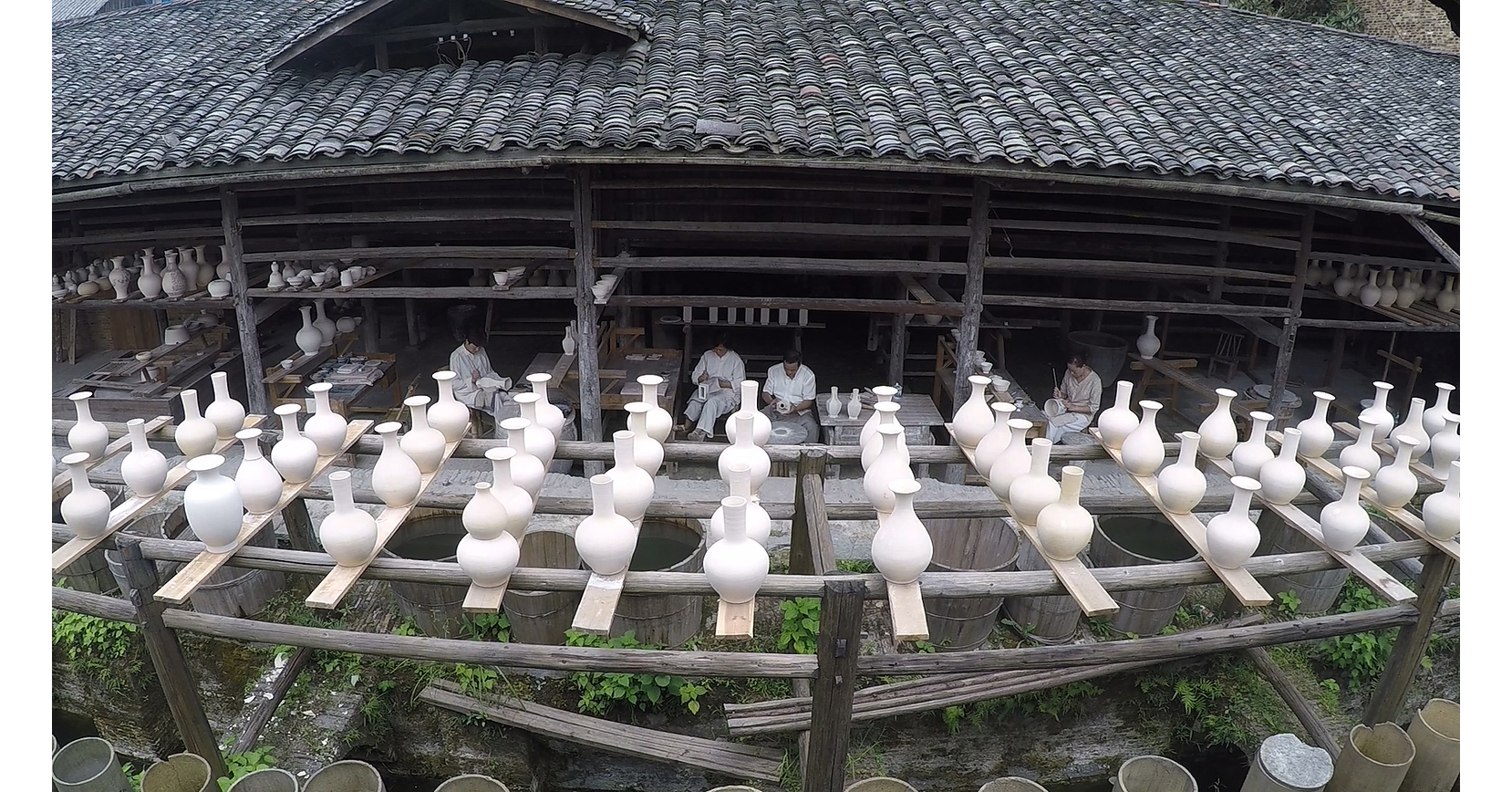
ceramic workshop complex at the Xujiayao site in Jingdezhen, Jiangxi province, offers a glimpse into the city’s
historic porcelain production. The shards came from Jingdezhen, Jiangxi province, often dubbed "China's capital of
ceramics". In 1004, impressed by the porcelain offered as tribute from the then-Changnan town, Song emperor Zhenzong
bestowed one of his reigning names, "Jingde", upon the town.There, an epic of earth and fire began.In the early Ming
Dynasty (1368-1644), Zhu Yuanzhang, founding emperor of the Ming, ordered the construction of the Imperial Kiln Factory
at an established site in the town to produce ceramic wares used exclusively by royalty. The unqualified products would
be broken and buried. More than one million pieces of porcelain waste were estimated to have piled up in the following
centuries.Thus, Zhushan Hill rose in downtown Jingdezhen. Only 48 meters above sea level, it stands as a testament to
the history of Chinese ceramics.Beyond imperial solemnity, crisscrossing streets bathed in wisps of smoke mark the
prosperity of the era's ceramics industry throughout society.At the Guanyinge, an ancient kiln site in Jingdezhen,
archaeological excavations have yielded a large complex of civilian kilns. Walking through today's farmlands, visitors
easily bump into researchers' latest discoveries over the past two years: well-protected accumulations of kiln waste
from the Southern Song Dynasty (1127-1279) to the Ming era.Putting these fragments of legends together is also like
restoring a piece of porcelain. This masterpiece now glitters again on a wide stage — on Saturday, the Jingdezhen
Handicraft Porcelain Industry Sites became China's latest entry on the World Heritage List during the 48th Session of
the World Heritage Committee of UNESCO in Busan, South Korea.The industry sites include porcelain production workshops
in town areas and raw material hubs in the wild, as well as their historical environment, such as transportation
networks and old city neighborhoods, with 45 components scattered across the 1,979-hectare property."They integrally
preserve the representative kilns, workshops and other production facilities of all stages of the development of
Jingdezhen handicraft porcelain technology from the 10th to 19th centuries," says Wei Qing, the main drafter of the
application for World Heritage status.According to Wei, no other property was previously inscribed on the World Heritage
List for porcelain production, though some sites featured elements related to the theme."Silk, tea and porcelain were
all important commodities in ancient China's commercial trade overseas," says Wei."Tea was consumed, silk decayed, but
ceramics — tempered through various chemical reactions — endured for ages."Evolving wisdomSince 2002, Wang Guangyao,
an archaeologist at the Palace Museum in Beijing, has hosted excavations on the Imperial Kiln Factory and other key kiln
sites in Jingdezhen.Thanks to his team's efforts, the city's past glory has emerged not only from documentation but also
from physical evidence."Based on studies of the strata, clear and accurate age information obtained from the sites
presents authentic scenarios of porcelain production facilities and their environments over various periods," Wang
says."Perhaps there is no other place in the world that yields such a perfect sample of the continuous evolution of
porcelain production technology," Wang says.The Luomaqiao kiln site, part of the World Heritage listing, has revealed a
Ming Dynasty gourd-shaped kiln unique to Jingdezhen, which drew on features of northern China's dome-shaped kilns and
southern China's dragon-shaped kilns.This design was later refined into the egg-shaped kiln, which could efficiently
fire various types of porcelain simultaneously.Along with the upgrading of kilns came the evolution of products.From the
Song Dynasty bluish-white porcelain to the Yuan Dynasty (1271-1368) blue-and-white ceramics, and from the Ming Dynasty
painted porcelain to the Qing Dynasty famille rose and enamel porcelain, Jingdezhen provided a procession of porcelain
varieties that delighted people worldwide.Wang explains: "Normally, when speaking of famous kilns elsewhere, we consider
the typical style of its products, but Jingdezhen has ceaselessly produced ceramics for nearly a millennium. So, when
thinking of its typical style, the answers may vary."According to him, the porcelain trade became highly profitable in
the late Tang Dynasty (618–907), and Jingdezhen artisans then wanted to claim their share of the market. They studied
the popular wares of each era, absorbed their strengths, and refined their own techniques accordingly."It is this spirit
of tolerance and innovation that has kept Jingdezhen kilns burning," he says.Archaeology also helps those buried shards
complete their unfinished journey. From 2015 to 2020, Wang helped organize a series of comparative exhibitions in the
Palace Museum. Also known as the Forbidden City, the museum was China's former imperial palace, where the
royal-qualified products of the Imperial Kiln Factory were taken.The unearthed Jingdezhen wares, restored from
deliberately broken objects, and their long-separated brothers — the intact porcelains with identical patterns in the
royal collection — were juxtaposed in the same gallery."Firing a kiln was very difficult. In some ways, it was like
opening a blind box," Wang says.Even when every procedure — 72 steps in total, according to ancient documents — was
done successfully, only about one-third of the products from the kiln would be qualified for royal use."Thanks to the
archaeological findings in Jingdezhen, people have a deeper understanding of the extant treasures in the Forbidden City
and elsewhere," Wang says.Archaeological efforts at civilian kilns, such as Guanyinge and Luomaqiao, have unearthed
artifacts with features showing they were also made to exclusively serve the royal family, indicating the close
interactions between imperial and civilian workshops.Firing tasks that the Imperial Kiln Factory could not finish on
schedule were allocated to civilian kilns, according to Weng Yanjun, director of the Jingdezhen Imperial Kiln
Institute."Therefore, the formulas and techniques once strictly controlled by the imperial factory entered their
civilian counterparts, boosting the overall production level in Jingdezhen," Weng says.According to him, archaeological
research over the past decades has helped establish "a gene bank" of various types of porcelain.Since 2022, the database
has collected key information about ancient porcelain pieces, including their patterns, styles, base materials, and
glaze."They are not only benchmarks for academic research, but also references for revitalizing cultural traditions,"
says Weng.In 2016, people witnessed Xujiayao, the biggest surviving kiln from ancient Jingdezhen, re-ignited after
decades of disuse. Hu Jiawang, then 72, played a major role in making this centuries-old kiln fire again."It shows our
emphasis on ancient crafts and endeavors in keeping them alive," says Hu, a national-level inheritor of Jingdezhen
traditional kiln and workshop making techniques.As a veteran craftsman, in addition to building the kilns, Hu is also
responsible for controlling the kilns' fire, which largely determines what comes out of the blind box.His unique
technique is to spit on the firewood. He tells the temperature by observing how saliva evaporates and the fire color
changes."Porcelain-making is an art of fire," says Hu. "Before modern equipment, we relied on hands-on experience passed
down through mentorship and built upon continuous improvement; that's how we have come this far."As time went by, modern
electric kilns appeared. Accuracy has improved, but in many collectors' eyes, the natural luster and hue of handmade
products still prevail.However, Hu kept an open mind."Only through ceaseless evolution can the products meet modern
needs, maintain vitality, and continue to move forward," he says.A global inspirationSince 2018, Wang from the Palace
Museum has also led an archaeological program on ancient port ruins in Ras al-Khaimah, the United Arab Emirates. As a
veteran porcelain researcher, he can easily tell that some shards on the shore of the Persian Gulf arrived from
somewhere familiar.The blue-and-white porcelain pieces produced in the Imperial Kiln Factory, probably a Ming emperor's
gifts, demonstrate the connection between the Ming Dynasty and the region.More Jingdezhen products have been found in
large numbers in shipwrecks and seaside sites across East, Southeast and South Asia, serving as evidence of booming
maritime trade.In 2023, Chinese researchers made another milestone deep-sea discovery of two mid-Ming shipwrecks on the
northwestern continental slope of the South China Sea. Not to Wang's surprise, the No 1 shipwreck's cargo was almost
full of Jingdezhen exports."Jingdezhen products were tested in the market and showcased their value," Wang says. "It
also tells of the inclusive nature of the city's porcelain industry."Traces of the imperial kiln style can be seen on
many pieces produced by the Jingdezhen civilian kilns for export. However, to better meet the demand of overseas
markets, the city's artisans during the Age of Exploration (15th century to 17th century) often switched from
traditional Chinese aesthetics to so-called Kraak Porcelains. Named after a merchant ship that first created its
popularity in Amsterdam, this variety had patterns specially designed for the European market.Based on recent
excavations, Guanyinge was the main hub for making these export-tailored products."Traded porcelain from Jingdezhen
became a vehicle of Chinese culture and an important symbol of art from the East," explains Wei, the application
drafter.For example, the Jingdezhen blue-and-white porcelain was a key element in the chinoiserie that was popular in
European decorative arts in the 17th and 18th centuries.European nobility became collectors of Chinese porcelain, and
many famous palaces feature "Chinese rooms". The artistic characteristics of Jingdezhen porcelain were then widely
imitated by European workshops.On the other hand, as Wei points out, technologies in Jingdezhen during the 13th to 19th
centuries also combined traditional Chinese porcelain-making with pigments from the Middle East and Europe, blending
Chinese and overseas decorative techniques.That was how the iconic blue-and-white, enamel and famille-rose porcelains
were created. "It's the meaning of mutual learning among cultures," Wei says.Impetus for urban growthIt is not easy to
find one's direction in the maze-like old neighborhood of Jingdezhen by the Changjiang River. Locals have a suggestion:
Find the alley with xianong (lower lane) in its name. All eventually lead to the river.Old porcelain workshops hide in
the streets, and the ancient piers that once witnessed the hustle and bustle of porcelain cargo are quiet, but the
locals' hearts still hold pride for their past.Growing up near the Luomaqiao kiln site, which has operated for 800
years, Xiong Wenbo, 54, is now a leading porcelain painter in the city."Top-tier artisans once gathered here, but many
people left no name," he says. "The industry rose and fell, and the handicraft also faced difficulties."Bidding for
World Heritage status offered a precious opportunity to better review our past and prolong our cultural lineage," he
says. "It's great to see the 'fresh' faces of the city."Saying "fresh", he by no means refers to the old neighborhood
giving way to modern urban construction. On the contrary, these communities that benefited from porcelain centuries ago
were renovated to maintain their original aesthetics.Walking through the alleys, people now recall many long-forgotten
links in the industry chain from the old days: a trade house, a paddy straw packaging shop, a pigment shop, and a place
to handle defective products."We have carried out systematic projects to restore the valuable old buildings and
decorated them in their original styles, following historical records and local people's memories," says Cheng Tong, a
designer in charge of the city's urban renewal. "In this way, traces of ancient life can still be found in modern
neighborhoods."To get a full picture of Jingdezhen, archaeologist Wang's horizon has expanded beyond the kilns. A
series of urban archaeology projects was launched in the alleyways and transportation network, unveiling some
lesser-known but equally important elements for the World Heritage status."Porcelains turned a small town into a
business center, but life here is more than that," Wang says. "We've gained more knowledge about society, the
relationship between humans and the environment, as well as people's beliefs and migration."At the Siwang Temple,
people pray for patronage from local deities who oversee the waters in Jiangxi. The Mazu Temple, where the goddess of
sailors of the sea was honored, offers wishes for safety and prosperity."People would take Jingdezhen products and
travel along the Changjiang River, then the Yangtze River, and eventually the ocean," Wang says."The global journey of
the products started here, in the alleys."Wei adds that the Jingdezhen Handicraft Porcelain Industry Sites also reshape
the understanding of China's agrarian society."Jiangxi, in ancient times, had a deeply rooted farming culture that could
also breed an industrial system featuring openness, strong mobility, and market-driven dynamics," he says. "It conveys
that ancient China also has a strong outward-looking dimension."Today, an estimated 60,000 artisans and artists from
elsewhere in China and even from overseas are living in Jingdezhen to pursue their porcelain dreams. Fire may no longer
burn the old way, but some ethos lingers no matter how much time changes."Jingdezhen is not a time capsule frozen at a
single point in history, but rather a window which continuously unfolds," says Weng, the institute director."Today, many
people live as porcelain professionals in the city. Here, cultural exchange, creation, and innovation are still
going."SOURCE China Daily 21% more press release views with Request a Demo × Modal title Also from this source
Foreign Streamers' Insight into China: an Egyptian uncovers Tianjin's "humor gene" This is a news report by
China Daily: Tianjin is an open, inclusive city with a remarkable sense of humor woven into its DNA. Curious about
this... Village fortunes transformed through 'purple economy' A news report from China Daily: At the height of summer,
800 hectares of lavender are in bloom across Sigong village — also known as Huanghuang... More Releases From This
Source Explore Art Entertainment Publishing & Information Services News Releases in Similar Topics Contact PR
Newswire Call PR Newswire at 888-776-0942 from 8 AM - 9 PM ET Chat with an Expert Contact Us General Inquiries Editorial
Bureaus Partnerships Media Inquiries Worldwide Offices Products Explore Our Platform Plan Campaigns Create with AI
Distribute Press Releases Report Results Amplify Content About About PR Newswire About Cision Careers Accessibility
Statement Global Sites APAC APAC - Simplified Chinese APAC - Traditional Chinese Brazil Canada Czech Denmark Finland
France Germany India Indonesia Israel Italy Japan Korea Mexico Middle East Middle East - Arabic Netherlands Norway
Poland Portugal Russia Slovakia Spain Sweden United Kingdom Vietnam My Services All New Releases Platform Login Data
Privacy Do not sell or share my personal information: Submit via [email protected] Call Privacy toll-free:
877-297-8921 Contact PR Newswire Products About My Services All News Releases Platform Login ProfNet Call PR Newswire at
888-776-0942 Terms of Use Privacy Policy Information Security Policy Site Map RSS Cookies Copyright © 2026 Cision US
Inc.