


GoldBod To Procure A Gold Traceability System Next Month -Sammy Gyamfi - The Ghanaian Chronicle Sign in Home News
Politics Business Entertainment Opinion Editorial Sports Health World Nigeria Regional Greater Accra Ashanti Central
Eastern Western File Western Volta Northern Ahafo Brong-Ahafo Bono Bono East Upper West Sign in Welcome!Log into your
account your username your password Forgot your password? Password recovery Recover your password your email Search Sign
in / JoinCourt Contact Us Sign in Welcome! Log into your account your username your password Forgot your password? Get
help Password recovery Recover your password your email A password will be e-mailed to you. The Ghanaian Chronicle Home
News Politics Business Entertainment Opinion Editorial Sports Health World Nigeria Regional Greater Accra Ashanti
Central Eastern Western File Western Volta Northern Ahafo Brong-Ahafo Bono Bono East Upper West Home General News
GoldBod To Procure A Gold Traceability System Next Month -Sammy Gyamfi General News GoldBod To Procure A Gold
Traceability System Next Month -Sammy Gyamfi By admin - July 22, 2026 0 557 FacebookTwitterPinterestWhatsApp The
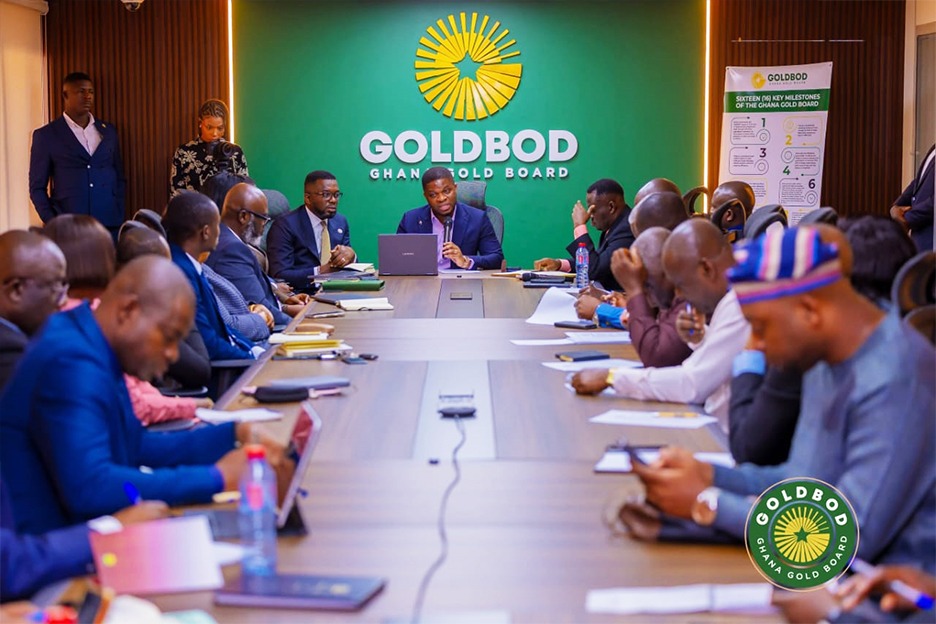
Parliamentary Select Committee on Economy and Development has conducted a working visit to the Ghana Gold Board
(GoldBod) to evaluate the institution’s operations, achievements and strategic direction, as Ghana seeks to maximise
the economic value of its gold resources. The visit formed part of Parliament’s oversight responsibility to assess
GoldBod’s contribution to the national economy, particularly in gold trading, foreign exchange mobilisation, reserve
accumulation and value addition. Chairman of the Committee, Eric Afful, said the engagement was intended to provide
lawmakers with firsthand insight into GoldBod’s performance and its role in supporting Ghana’s economic recovery
through the effective management of the country’s gold resources. He noted that the Committee was particularly
interested in understanding how GoldBod is strengthening the gold value chain, increasing foreign exchange inflows and
ensuring that the country derives greater value from its mineral wealth. GoldBod Highlights Reforms Welcoming the
delegation, the Chief Executive Officer of GoldBod, Sammy Gyamfi, presented a detailed overview of the institution’s
transformation from the former Precious Minerals Marketing Company (PMMC) into the Ghana Gold Board. He outlined the
Board’s licensing regime, funding model and the ongoing review of the Ghana Gold Board Act, 2025 (Act 1140), as well
as initiatives aimed at promoting responsible mining, enhancing gold traceability and increasing local value addition.
Mr Gyamfi also briefed the Committee on GoldBod’s partnerships with large-scale mining companies, the Board’s gold
aggregation performance in 2025 and 2026 and its new trading model designed to improve efficiency, transparency and
accountability within Ghana’s gold export industry. In a major development, he announced that GoldBod would procure a
comprehensive gold traceability system by the end of August 2026. The digital system will enable the Board to track
every ounce of gold purchased from licensed mine sites through the entire supply chain to export.According to him, the
initiative is expected to strengthen accountability, boost confidence in Ghana’s gold exports and significantly curb
illegal gold trading and smuggling. 54 Metric Tonnes Purchased in Six Months Gyamfi disclosed that GoldBod purchased 54
metric tonnes of gold from the artisanal and small-scale mining (ASM) sector during the first half of 2026, placing the
country on course to match or even surpass its record performance from the previous year. The figures further underscore
the growing dominance of the ASM sector in Ghana’s gold industry and reaffirm gold’s position as the country’s
leading source of foreign exchange earnings. The impressive performance follows an exceptional 2025, when GoldBod
purchased and exported 104 metric tonnes of gold from the ASM sector—the first time production from small-scale miners
exceeded that of Ghana’s large-scale mining companies. The ASM sector generated nearly US$11 billion in foreign
exchange earnings in 2025, outperforming the approximately US$9 billion contributed by large-scale mining firms. The
Board said the trend reflects the increasing importance of artisanal and small-scale mining to Ghana’s economy, with
the sector emerging as the country’s largest contributor to export revenue.US$16.11 Billion Gold Transactions GoldBod
further revealed that it purchased and exported gold worth US$16.11 billion between January 2025 and May 2026. During
the period, the Board acquired 135.843 metric tonnes of gold, of which 135.221 metric tonnes originated from the
artisanal and small-scale mining sector, accounting for virtually the entire volume. According to the Board, the
performance demonstrates the success of reforms aimed at formalising the small-scale mining sector, reducing illegal
gold trading and increasing official gold purchases. These reforms, it explained, have channelled significantly more
gold through formal marketing systems, enabling the state to capture greater export revenues while strengthening
Ghana’s external reserves through increased dollar inflows.As part of efforts to regulate the gold trade, GoldBod
announced that it had licensed 1,184 gold buyers as of May 31, 2026.The licensed operators comprise two aggregators, 67
self-financing aggregators, 736 Tier Two buyers and 379 Tier One buyers.Under the GoldBod framework, all licensed buyers
are required to purchase gold exclusively from licensed miners before selling it to the Board for export. The licensing
regime forms part of broader measures to reduce smuggling, improve traceability and ensure that export proceeds flow
through official channels to strengthen Ghana’s foreign exchange reserves.Gold Sector Supporting Economic Recovery
GoldBod attributed the sector’s strong performance to reforms introduced to combat gold smuggling and improve the
formal purchase of gold from artisanal miners. According to the Board, these measures have substantially increased the
volume of gold traded through official channels, allowing Ghana to derive greater economic benefit from its largest
export commodity. Although GoldBod’s original projections for 2026 were based on an average gold price of about
US$5,000 per ounce and weekly purchases of approximately 2.5 metric tonnes, the Board indicated that current gold
prices, while lower than earlier assumptions, remain above 2025 levels. As a result, Ghana is still expected to record
higher gold export earnings in 2026 than it did in the previous year, although revenues may fall short of the Board’s
initial projections because of fluctuations in international gold prices.With artisanal and small-scale mining
continuing to outperform the large-scale mining sector, GoldBod expects gold to remain a major pillar of Ghana’s
foreign exchange earnings and economic recovery throughout 2026. Supporting Ghana’s Reserve Accumulation
ProgrammeGoldBod’s expanding role is also expected to advance the government’s Ghana Accelerated National Reserve
Accumulation Programme (GANRAP), which aims to increase Ghana’s foreign reserves to the equivalent of 15 months of
import cover by the end of 2028. Current estimates place Ghana’s import cover at approximately 5.7 months, leaving a
gap of about 9.3 months to meet the target. Government estimates indicate that achieving this objective will require an
average annual net reserve build-up of about US$9.5 billion, after accounting for external debt servicing, foreign
exchange interventions, energy sector obligations and other statutory payments. As part of the programme, the government
has set a weekly gold purchase target of approximately 3.02 metric tonnes, which officials estimate could generate
annual gross inflows of about US$25.3 billion. According to GoldBod, these inflows would significantly strengthen
Ghana’s reserve position, support exchange rate stability and enhance long-term macroeconomic resilience. For more
news, join The Chronicle Newspaper channel on WhatsApp: https://whatsapp.com/channel/0029VbBSs55E50UqNPvSOm2z
FacebookTwitterPinterestWhatsApp Previous articleSABC Apologises To Ghana Over False Ebola ReportNext articleDriver
Plots With GoonsTo Rob Master…Police Recover GH¢300,000 adminhttps://chronicle.techfocus24.com RELATED ARTICLESMORE
FROM AUTHOR NPP Questions Govt’s Fiscal Numbers Ahead Of Budget Review Police Arrest NDC Tiktoker … Over Alleged
Insults Against Bawumia …But Former Veep Calls For Discontinuation Of Case BoG Endorses COCOBOD’s Local Market
Financing Policy LEAVE A REPLY Cancel reply Please enter your comment! Please enter your name here You have entered an
incorrect email address! Please enter your email address here Save my name, email, and website in this browser for the
next time I comment. Δ Exchange RateExchange Rate USD: Thu, 23 Jul. EDITOR PICKS Feature: “No-Bed Syndrome”
Postscript 1: England’s corridor-care crisis is not an... July 20, 2026 Feature: Of Watches And Cars – Akofena July
17, 2026 Feature: The Bitter Pill July 16, 2026 POPULAR POSTS WR Minister calls for a comprehensive strategy to deal
with Galamsey March 14, 2025 Of Modest Celebration, Fresh Budget, Sahel Wanderings March 14, 2025 Southern African
forces to leave DR Congo as rebels gain ground March 14, 2025 POPULAR CATEGORYGeneral News8918World
News4192Sports3631Entertainment News3573Nigeria3501Business2088Opinion1929Ashanti1073Editorial960 ABOUT USFOLLOW US
Court Contact Us © The Ghanaian Chronicle